This article was originally published in the Digital Journal and Tech Times.
At a time when Washington is better known for deadlock than problem-solving, one of the more practical bipartisan conversations in Congress is happening around financial innovation, and women are helping lead it.
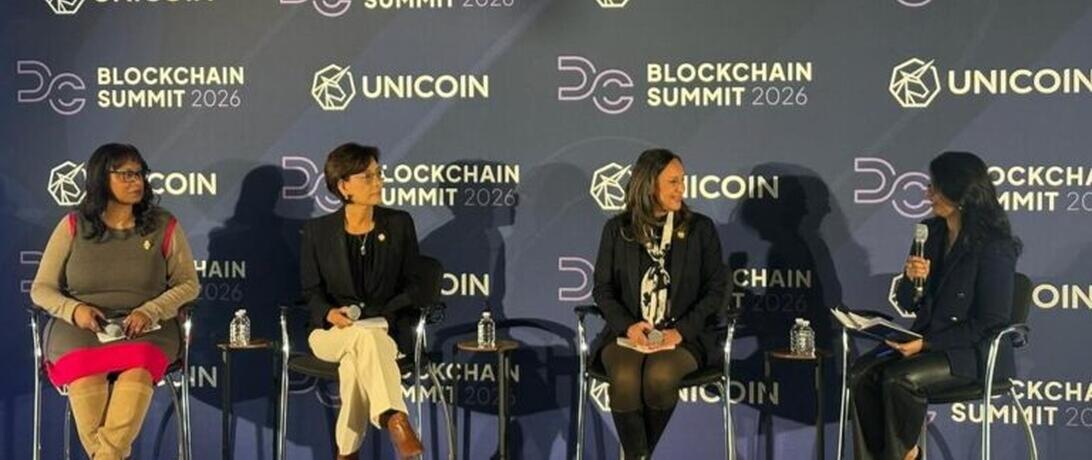
A recent panel at the 2026 Blockchain Summit made that clear. Moderated by Sahana Dharmapuri of Our Secure Future, the Women Leading in Financial Innovation panel brought together Reps. Monica De La Cruz, Janelle Bynum, and Young Kim. What made the discussion notable was not simply that women were talking about blockchain and fintech. It was the way they framed the issue, tying financial innovation to everyday economic pressures, public trust, and the responsibilities that come with shaping policy.
That matters because financial innovation is still too often treated as a narrow technical issue. It is not. Dharmapuri opened with the right question: who is shaping these systems, and who benefits from them? If the future of finance takes shape without real attention to access, inclusion, and everyday use, it will not correct old inequities. It will carry them forward. It will adapt them to new systems.
The panel's most compelling moments came when the conversation moved away from abstraction. Rep. Bynum spoke about managing payroll from a hospital bed after giving birth, a story that captured how unforgiving financial systems can be for the people expected to rely on them. Rep. De La Cruz drew on her own experience as a small business owner navigating cross-border transactions. These were not side anecdotes. They made clear that the debate over payments, credit, and digital assets is not simply about new technology. It is about whether the financial system is doing its job for the people who rely on it.
That perspective helped give the discussion its force. The focus was not on the technology alone, but on whether it can solve real problems through faster payments, broader access to credit, and fewer obstacles for small businesses. Blockchain and digital assets, in that view, were not an end in themselves. They were possible tools for fixing systems that too often fail the people using them.
The panel also made clear that bipartisanship is still possible when the conversation stays practical. All three members pointed to cross-party work, from the Women's Congressional Caucus to the Crypto Caucus, along with joint legislative efforts to clarify the rules and expand access to financial technology. The point was not that partisan differences have disappeared. It was that on this issue, the more meaningful divide may be between those who want to modernize outdated systems and those content to let them lag behind.
That matters beyond Congress. Rep. Kim made clear that financial technology is no longer separate from questions of national competitiveness and global influence. In the discussion, blockchain was framed less as a passing trend than as a tool with practical uses, including faster humanitarian aid, more transparent cross-border payments, and stronger efforts to combat illicit finance. The question now is what role the United States intends to play in shaping that future. It is whether the United States will help shape that future or fall behind it.
The panel also pointed to a quieter shift in governance itself. The members spoke frankly about using AI tools to prepare for meetings and keep up with rapidly changing issues. It may seem like a minor detail, but it shows how quickly the ground is shifting. Policymakers are already adapting to a world where innovation is changing not just the subject of policy, but the work of policymaking itself.
What gave the discussion its real significance was not simply that women's lived experiences were included in a conversation about financial innovation. It was that these experiences helped define what the conversation should be about. The Congresswomen brought the debate back to access, trust, and whether these systems actually serve the public. At a moment when financial innovation is often discussed in the language of speed and disruption, that is not a superficial shift. It is a more serious way of thinking about what innovation is for.