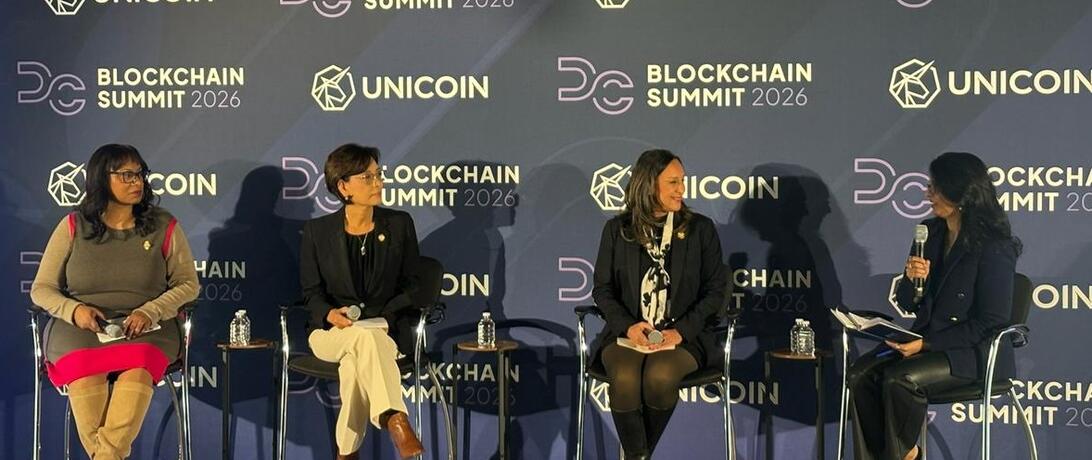
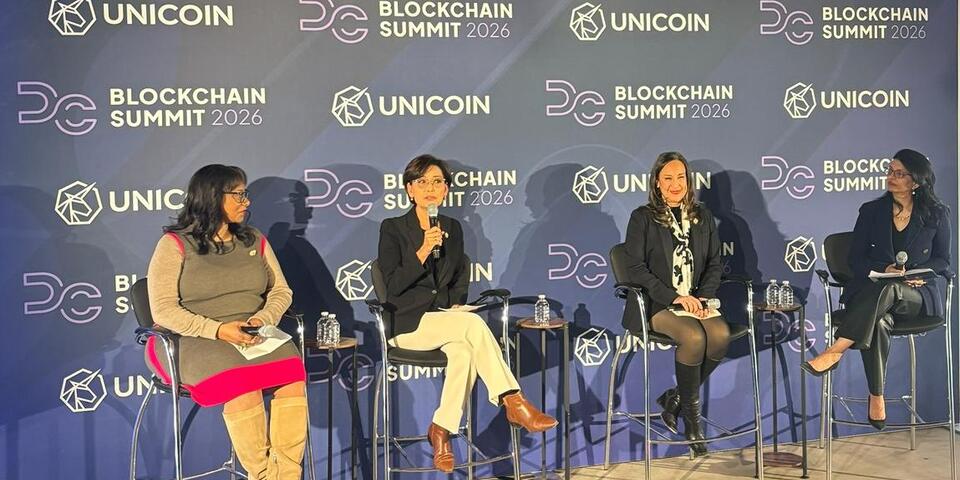
As emerging technologies continue to transform global financial systems, policymakers are increasingly grappling with how to ensure innovation expands opportunity, strengthens security, and serves the public good. These questions took center stage at the 2026 Blockchain Summit in Washington, D.C., where Our Secure Future Vice President Sahana Dharmapuri moderated a featured panel, Women Leading in Financial Innovation.
The discussion brought together Representatives Monica De La Cruz (R-TX-15), Janelle Bynum (D-OR-5), and Young Kim (R-CA-40) for a conversation on the future of financial technology, digital assets, and the role of women leaders in shaping emerging policy debates. Throughout the conversation, panelists emphasized a shared commitment to modernizing financial systems, expanding economic opportunity, and ensuring the United States remains competitive in a rapidly evolving technological landscape.
Additionally, speakers highlighted how financial innovation extends beyond technology itself. The discussion focused on the real-world challenges women entrepreneurs and communities face when navigating outdated financial systems, and how emerging tools such as blockchain and digital assets can help address barriers to access, efficiency, and inclusion.
The panel also explored the growing relevance of financial technologies in international development and humanitarian contexts. Participants discussed how blockchain-based systems may improve transparency, reduce transaction costs, and facilitate more efficient delivery of assistance in crisis settings. These themes closely align with ongoing conversations within the Women, Peace and Security (WPS) agenda about how emerging technologies can support resilience, economic security, and inclusive governance.
Finally, the conversation also demonstrated that bipartisan collaboration remains possible on issues where practical solutions and long-term competitiveness are at stake. Panelists pointed to ongoing cross-party efforts to clarify regulatory frameworks, encourage responsible innovation, and expand access to financial technologies while maintaining public trust and accountability.
For Our Secure Future, the discussion reflected a broader commitment to exploring how emerging technologies intersect with peace, security, and democratic resilience. As innovation continues to reshape financial systems around the world, ensuring that women are not only included in these conversations but helping lead them will remain essential to building more secure, equitable, and resilient societies.
Learn more about Our Secure Future’s work on WPS and emerging technologies here: Project Delphi