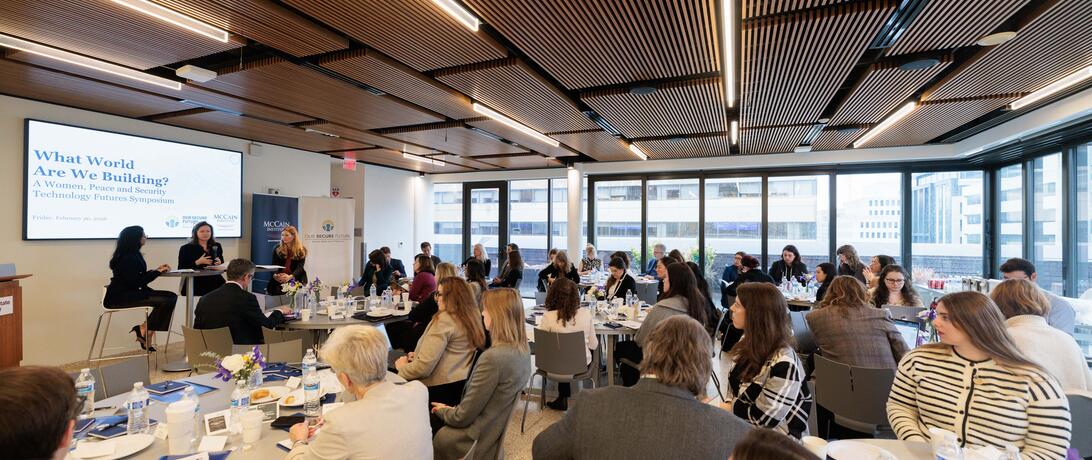
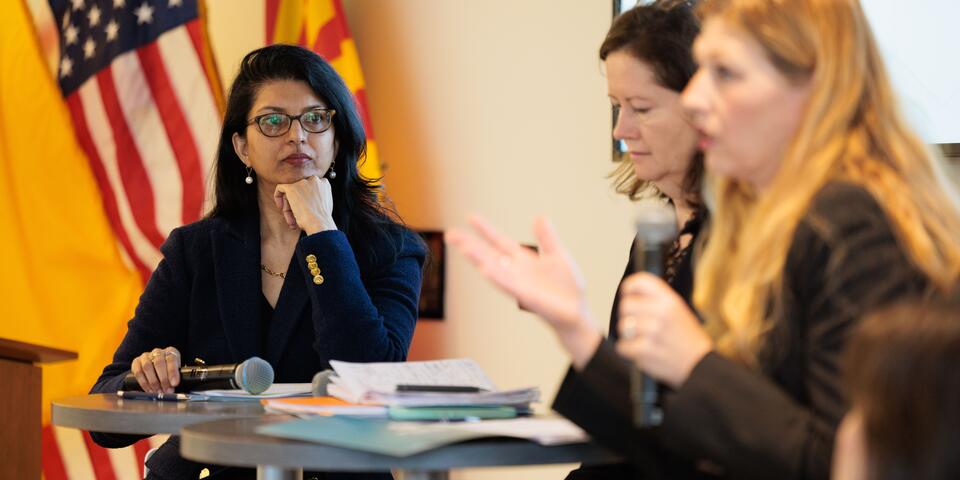
WASHINGTON, D.C. (February 20, 2026) – Our Secure Future (OSF) and The McCain Institute at Arizona State University (ASU) hosted a symposium exploring the role of the Women, Peace and Security (WPS) agenda in technology policy and product design, and the need for strategic dialogue to bridge policy, practice, and technical innovation.
The symposium also marked the launch of the Our Secure Future report Women, Peace and Security and Technology Futures: What World Are We Building?, by Sahana Dharmapuri and Jolynn Shoemaker, which examines how emerging technologies shape women’s participation and security and highlights three critical blind spots in AI and technology development through a Women, Peace and Security lens.
“Events like this are only as powerful as the people willing to contribute and your work is a reminder that advancing women’s leadership in the technology space is essential. At a moment when technology innovation and policy is moving quickly, it matters enormously that WPS practitioners, technologists, and policymakers work together to ask the hard questions. We must ensure that the technologies shaping peacebuilding and security don’t get built without us,” said Our Secure Future Vice President Sahana Dharmapuri.
The conversation focused on the current landscape around technology, peace and security policy, the intersection of technology and democracy, and practical innovations towards the advancement of WPS.
“Women are not asking to be involved just for charity or for special accommodation, but rather, they just want to be involved in decisions when their own futures are being made,” said McCain Institute Chief Program Officer Ambassador Cindy Dyer.
“We’re seeing an increase in online abuse, dangerous surveillance methods, and identity-based manipulation—the impact on women is very real,” said Our Secure Future Foreign Policy Fellow, Amanda Van Dort. “Authoritarian actors have realized that if you silence women, you weaken democracy. [AI companies] must realize they are not just building AI infrastructure; they’re building the architecture for democracy.”
Read the full report here: Women, Peace and Security and Technology Futures: What World Are We Building?