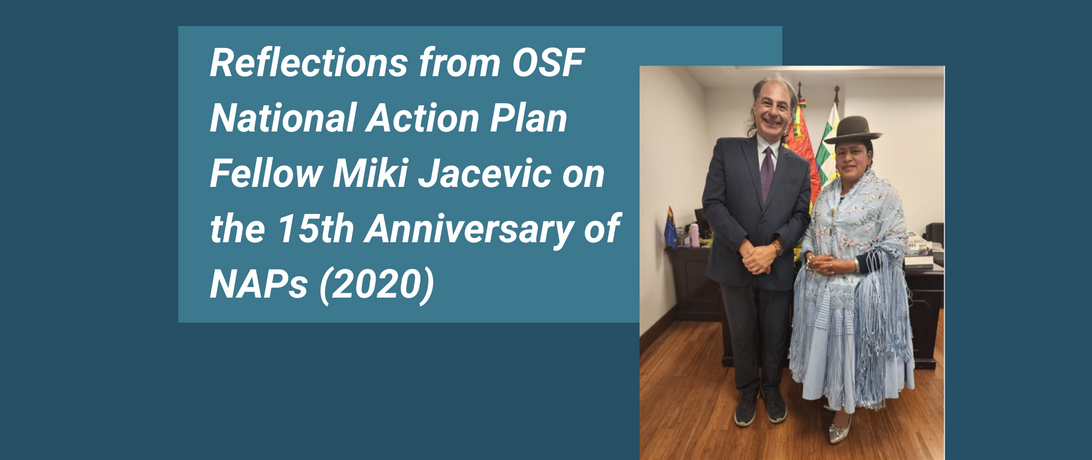
In 2010, I started working on NAPs. For almost fifteen years before that, I had worked with many women leaders on the frontlines in conflict-affected countries. I was ever convinced that the WPS agenda will only prosper once we get official institutions, government officials, the international community, and foreign donors to actually take action to support these women. At the time, there were about 19 countries with NAPs, almost all of which were European donor nations. Canada’s Ambassador for Women, Peace and Security, Jacqui O’Neill, who was a colleague at the time, asked me, “now that you clearly are on this journey, what would success look like to you in ten years?”
We are now (incredibly) ten years later, at the 20th anniversary of UNSCR 1325. There are items to celebrate and still many more to keep working at.
I told Ambassador O’Neill that, in my dream, we would have about 60 countries with NAPs. We have far surpassed that goal. Today, there are 86 country NAPs, and I am working on six more, so hopefully by the end of this anniversary year we will reach 90 countries with a 1325 NAP. Similarly, almost all of the international, multilateral, and regional organizations – from NATO and EU to AU and ASEAN – have a plan and robust architecture on WPS. In most countries, NAPs are also aligned with other national priorities. Most exciting is the connection of the WPS agenda, including NAPs, with the CEDAW committee reviews – most nations are now required to report on General Recommendation No. 30, which includes specific inquiries around the country’s NAP, its implementation and budgeting.
Having worked with 50 countries in the development of their NAPs, I remain ever more committed and impressed, above all, to the transformative potential of the NAP process. It is so unique to get Ministries of Defense and Interior to sit together with Social or Women’s Ministries and civil society. Having had a privilege of seeing this process in some countries unfold for a number of years, I can speak to its value not just to create action on WPS, but, in general, to advance the needed understanding of inclusive governance as a key strategy to address many societal challenges across all countries, not just in those affected by violence and conflict.